


Good vision shapes daily life — from reading and driving to enjoying the faces and places you love. Routine, thorough eye examinations do more than update a prescription; they reveal the full picture of ocular health and help preserve sight for years to come.
At Vision World Bay Shore we believe a comprehensive eye exam is a cornerstone of preventive care. A complete visit evaluates visual clarity, how your eyes work together, and the structural health of the eyes — all while screening for conditions that can begin without obvious symptoms.
Comprehensive exams matter for everyone: children learning visual skills, adults managing screen-time and work demands, and older adults watching for age-related changes. Early detection improves outcomes, so making eye exams part of your routine is one of the most effective steps you can take to protect vision.
This page explains what a full eye exam covers, how testing helps detect common problems, and the practical steps taken to diagnose and manage vision issues across the lifespan.
A full eye exam goes beyond checking whether you need glasses. It combines a detailed review of your eye structures with functional tests that reveal how well your eyes perform in daily life. Because many eye diseases are subtle at first, a comprehensive evaluation provides the best chance to catch problems early.
During the visit, your clinician will review your personal and family medical history, discuss any visual symptoms, and consider things like work or hobbies that influence your visual needs. This context helps tailor the exam and any follow-up care to your lifestyle and risk profile.
Importantly, the eyes offer a unique window into overall health. Careful inspection of blood vessels and retinal tissue can reveal signs of systemic issues such as diabetes or hypertension, making routine eye care a part of broader preventive health.
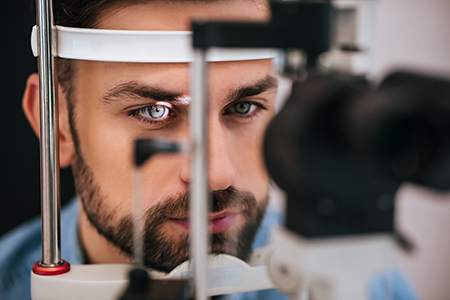
Modern eye exams mix comfortable, noninvasive tests with advanced imaging to build a complete view of your eyes. Testing begins with visual acuity and refraction to determine clarity and any need for corrective lenses, then moves on to binocular function, depth perception, and how well your eyes track moving objects.
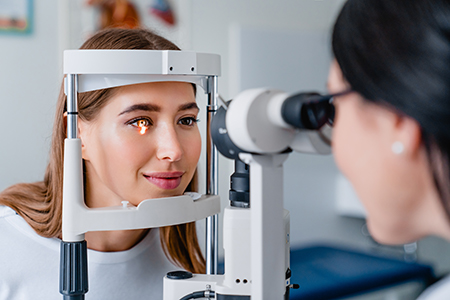
Examination of the eye’s front structures and internal tissues is performed with a slit lamp and, when indicated, retinal imaging. Intraocular pressure checks and peripheral field testing help screen for glaucoma and other conditions that can reduce vision without early symptoms.
Many of these steps are quick and painless. Depending on findings and risk factors, we may recommend dilation to allow a more thorough look at the retina and optic nerve; this can reveal early signs of retinal disease or vascular changes that warrant closer monitoring.
A comprehensive visit typically combines clinical testing with specialized measurements. Visual acuity and refraction determine the exact prescription required for crisp sight. Additional functional tests assess color perception, depth perception, and how well both eyes coordinate.
Objective instruments such as autorefraction and keratometry give quick, accurate measurements of the eye’s focusing power and corneal shape. These tools help with contact lens planning and identify irregularities that can affect vision quality.
When risk or symptoms suggest the need, we expand testing with retinal photography, optical coherence tomography (OCT), or automated visual field testing. These technologies capture high-resolution images and maps that serve as baseline records for comparison over time.
Visual acuity testing – Measures the sharpness of vision in each eye and establishes if correction is needed
Color and contrast assessment – Detects inherited color vision differences and problems that affect the ability to distinguish hues or contrast
Binocular vision and stereopsis – Evaluates how the eyes team up to deliver depth perception and coordinated movement
Ocular motility testing – Checks eye muscle balance and tracking as the eyes follow moving targets
Pupil response testing – Observes how pupils react to light and can offer clues about neurological or ocular health
Autorefraction & retinoscopy – Provide objective starting points for refining an accurate eyeglass or contact lens prescription
Refraction – The clinical process by which your exact corrective prescription is determined
Keratometry – Measures corneal curvature to guide contact lens fitting and detect irregularities
Slit-lamp examination – A detailed look at the front and internal structures of the eye under high magnification
Peripheral visual field testing – Screens for blind spots and changes in side vision
Intraocular pressure measurement – A key screening tool for glaucoma risk
Pupil dilation – When used, dilation allows a thorough view of the retina, blood vessels, and optic nerve, helping identify conditions like diabetic retinal changes, macular problems, or other retinal concerns
Please note: dilating eye drops take about 20 minutes to work, and your eyes may be sensitive to light for a few hours following your exam. It’s wise to bring sunglasses to your visit or have someone drive you home from the exam.
When warranted, additional testing such as fundus photography, OCT, fluorescein angiography, corneal topography, or automated visual fields can provide deeper diagnostic information. These tools are especially valuable for tracking progression and tailoring a long-term care plan.
Keeping clear, dated images and measurements helps your eye care team spot subtle changes over time and make informed recommendations about treatment or monitoring.
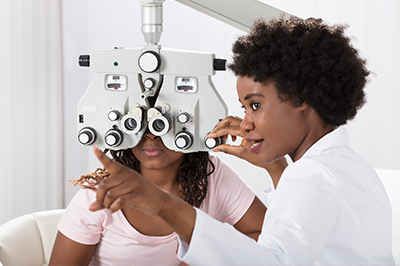
Refractive errors are among the most frequent reasons patients visit an eye doctor. They occur when the eye does not focus light precisely on the retina, producing blurred or strained vision. Identifying the specific type of refractive error is the first step toward comfortable, clear sight.
Myopia (nearsightedness), hyperopia (farsightedness), astigmatism, and age-related presbyopia each influence vision in different ways and at different life stages. Symptoms can include blurred distance or near vision, headaches, eye strain, or difficulty with glare and night driving.
Correcting refractive errors is typically straightforward with eyeglasses or contact lenses. For patients interested in surgical options, an eye exam includes evaluation and measurements needed to determine whether a surgical procedure is a suitable choice.

After diagnosis, treatment is tailored to your vision needs, health profile, and daily activities. Many refractive errors are resolved with glasses or contact lenses chosen for comfort, lifestyle, and visual demands. Our team reviews lens options and fitting considerations so you leave with solutions that work.
When medical conditions are identified — such as glaucoma, macular changes, or retinal concerns — the exam results guide a management strategy. That may include more frequent monitoring, medical treatments, or collaboration with a specialist when appropriate.
Follow-up and preventive guidance are an important part of ongoing care. We provide recommendations for exam frequency, visual ergonomics for screen use, and when to return for a focused evaluation based on changes in symptoms or health status.

Children’s visual development is rapid and foundational for learning and coordination. Early, age-appropriate eye exams detect issues that can affect reading, attention, and school performance long before a child realizes something is wrong.
Professional guidelines recommend several key vision checks during early childhood and before school entry; these visits ensure visual acuity, eye alignment, tracking, and focusing skills are developing on schedule. If risk factors are present, more frequent follow-up may be advised.
Exams for children use friendly, nonthreatening methods and focus on building a comfortable experience. When glasses, therapy, or additional services are needed, early intervention yields the best long-term results.
In summary, a comprehensive eye exam is a thorough, preventive healthcare visit that assesses both sight and ocular health across the lifespan. Regular examinations support early detection, precise prescriptions, and personalized care plans that keep vision clear and eyes healthy. Contact Vision World Bay Shore for more information or to inquire about scheduling a comprehensive eye exam.
Even if your vision is 20/20, it’s essential to keep in mind that everyone requires a comprehensive eye exam periodically. Nonetheless, how often you or a member of your family should have one depends on several factors. A patient’s age, family and personal medical histories, a previous eye injury, existing eye conditions, and environmental or occupational factors influence the recommended frequency.
The American Optometric Association offers the following guidelines:
Children – Children should receive an eye exam at between 6 months to 12 months of age, once between the ages of 3 and five, before entering first grade and then annually thereafter. However, in the presence of certain risk factors or diagnosed vision issues and impairments, the recommended exam schedule may differ.
Adults – In the absence of risk factors, adults between the ages of 18 to 39 years should schedule an eye exam at least once every two years. Because several eye diseases can develop with age, a baseline eye exam is recommended at the age of 40. A patient’s risk factors determine the recommended schedule between the ages of 40 and 64 years. At-risk adults over 40 may require annual or more frequent eye exams. For low-risk adults, the eye doctor may determine that an exam every two years may suffice. For adults 65 and older, annual exams are recommended.
It’s essential to remember to bring your current eyeglasses or contact lenses prescription to your visit. If you also wear reading glasses, computer glasses, protective eyewear, or other visual aids, you may want to bring these as well. Because getting your pupils dilated can leave you sensitive to light for several hours following your appointment, it’s wise to bring sunglasses to the appointment.
In addition to your medical and eye health history, you will be asked about your family’s eye health history and any contributing factors that may increase your risk of eye disease. As best you can, be prepared with this information. It’s also helpful to have a comprehensive list of any medications that you are taking. Remember to bring your medical insurance and vision insurance card and information along to your visit.
If you have questions or concerns about your eye health and vision, an eye exam visit offers an excellent opportunity to discuss what's on your mind and get helpful eye care tips and guidance.
It’s essential to keep in mind that vision screenings take a very basic look at your eyesight and are not used to diagnose or treat vision problems. They are designed to merely detect them and are often performed by a school nurse or pediatrician. While a vision screening may be useful in identifying a vision impairment that requires further care, it is by no means a substitute for a comprehensive eye exam. As a rule, the only way to precisely detect and diagnose any vision abnormalities or identify the presence of eye disease is through a comprehensive and in-person eye exam.
If you have vision insurance, you can expect to have coverage for some aspects of care. While every vision plan offers specific benefits, they generally offer some coverage for routine care such as annual exams and eyewear. If your eye condition qualifies as a medical issue, some coverage under your medical insurance may apply. At the office of Vision World Bay Shore, we strive to optimize your insurance benefits and minimize your out-of-pocket expenses. Although our financial office is well versed in the complexities of insurance coverage, it’s always a good idea to review your specific benefits with your HR department or insurance carrier.
At the office of Vision World Bay Shore, we welcome patients of all ages and offer a comprehensive range of vision care services and products to help every member of your family protect the health of their eyes and enjoy optimal sight. We use the most advanced technology and proven treatment methods to deliver precise, gentle, and effective care. Whether you or any member of your family require an eye exam, prescription lenses, protective eyewear, contacts, and hard-to-fit contact lenses to pre and post-LASIK care or other eye care services, we’re well equipped to help.
For more information on our office and the many services we provide, give us a call today.
A comprehensive eye exam is a complete evaluation of both vision and ocular health performed by an optometrist or qualified eye care professional. It goes beyond a basic vision screening to measure visual acuity, refraction, eye alignment and how the eyes work together. The exam also inspects the structures of the eye to detect early signs of disease that may not yet cause symptoms.
During the visit the clinician uses a combination of patient history, clinical tests and instrument-based imaging to form a full picture of eye function and health. Results are used to determine prescription needs, identify risk factors for eye disease and recommend follow-up or treatment when indicated. Regular comprehensive exams support early detection and management of conditions that can affect long-term vision.
Most people benefit from routine comprehensive eye exams, but the ideal frequency depends on age, medical history and risk factors. Children, adults over 40, people with diabetes or high blood pressure, and those with a family history of eye disease typically need more frequent assessments. Even asymptomatic adults should follow recommended exam intervals because many sight-threatening conditions can develop without obvious early signs.
Pediatric schedules often call for exams at infancy, again before school entry and periodically during childhood, while adults commonly begin baseline exams around age 40 to screen for age-related changes. Your eye doctor will recommend a personalized follow-up plan based on findings, lifestyle needs and any existing medical concerns. Adhering to the recommended schedule helps preserve vision and detect problems when treatment is most effective.
A comprehensive eye exam typically includes visual acuity testing, refraction to identify prescription needs, and measurements of how the eyes focus and work together. Clinicians also check pupil response, eye movements, color vision and peripheral visual fields to evaluate overall visual function. A slit-lamp examination inspects the front and internal structures of the eye under magnification, while intraocular pressure measurement screens for glaucoma risk.
Advanced diagnostic tools may include retinal imaging, optical coherence tomography (OCT) and fundus photography to document and monitor the retina and optic nerve. These tests provide high-resolution images that make it easier to detect subtle changes over time and support more precise diagnoses. Your clinician will explain which tests are performed and why, tailoring the exam to your individual needs.
The eye provides a unique view of blood vessels and nerve tissue, allowing clinicians to identify signs of systemic diseases during a routine exam. Changes in retinal vessels, optic nerve appearance or retinal tissue can indicate conditions such as diabetes, hypertension, high cholesterol and certain autoimmune or neurologic disorders. Detecting these signs early can prompt further medical evaluation and improve overall health outcomes.
Eye care professionals collaborate with primary care physicians and specialists when findings suggest a broader medical problem, providing documented observations and diagnostic images. This integrated approach supports coordinated care and timely intervention. Because the eyes can reflect systemic health, regular exams serve as an important component of general preventive care.
At your first comprehensive visit you can expect a thorough intake of medical and ocular history, including questions about symptoms, medications and family history of eye disease. The exam typically begins with basic vision tests and progresses through ocular alignment and muscle function checks, refraction and slit-lamp inspection. Instrument-based imaging or additional diagnostic tests may be performed to document retinal and optic nerve health.
The visit generally lasts up to an hour depending on the number of tests required and whether dilation is needed to view the back of the eye. The clinician will review results with you, explain any findings and provide personalized recommendations for glasses, contacts, treatment or follow-up care. Scheduling and continuity of care are handled by our staff, and the office will provide guidance on any next steps after your assessment.
Dilated eye exams enlarge the pupil to allow a more complete view of the retina, optic nerve and other internal structures, improving the detection of retinal disease and subtle pathology. Dilation is particularly important for patients with diabetes, a family history of retinal disease, symptoms such as flashes or floaters, or any signs that suggest posterior eye involvement. Many serious conditions produce minimal symptoms in early stages, and dilation increases the likelihood of timely diagnosis.
Dilating drops typically take about 20 minutes to work and may cause light sensitivity and blurred near vision for a few hours afterward, so bringing sunglasses or arranging transportation can be helpful. Your clinician will advise if dilation is recommended based on your age, risk factors and the initial findings. When needed, dilation remains one of the most effective methods for thorough retinal evaluation.
Refractive errors are diagnosed through refraction testing, which measures how light focuses within the eye and determines the precise prescription needed for clear vision. Tests such as autorefraction, retinoscopy and manual refraction help the clinician quantify myopia, hyperopia, astigmatism and presbyopia. These measurements are combined with visual acuity testing and binocular vision assessment to determine the best correction strategy.
Treatment options commonly include eyeglasses and contact lenses, which remain the safest and most widely used methods to correct refractive errors. For appropriate candidates, refractive surgery or specialized contact lens designs may be discussed as alternative options to reduce dependence on corrective lenses. Your eye care professional will review the benefits and limitations of each approach and recommend the option that best fits your vision needs and lifestyle.
Pediatric eye exams are tailored to a child’s developmental stage and use age-appropriate testing methods to assess visual acuity, eye alignment, tracking and focusing skills. For infants and very young children, exams rely more on observation, specialized tools and objective testing to evaluate eye structure and function. As children grow, chart-based acuity checks and binocular vision testing become possible to monitor learning-related visual skills.
Early exams are crucial because undetected issues such as amblyopia (lazy eye), strabismus (misalignment) or significant refractive errors can affect visual development and academic performance. The American Optometric Association recommends specific screening intervals for infants, preschoolers and school-age children, and your eye doctor will establish a follow-up plan based on risk factors and findings. Timely intervention in childhood often leads to better long-term visual outcomes.
Advanced imaging tools include optical coherence tomography (OCT), wide-field fundus photography and corneal topography, each offering detailed information about different eye structures. OCT produces cross-sectional images of the retina and optic nerve to detect early macular disease or glaucoma-related changes, while fundus photography documents the appearance of the retina for comparison over time. Corneal topography maps the shape of the cornea, which is helpful for contact lens fitting and detecting conditions such as keratoconus.
Automated visual field testing, fluorescein angiography and other specialized tests may be ordered when clinical findings indicate the need for deeper evaluation. These technologies allow clinicians to detect subtle changes earlier and to monitor disease progression or treatment response with greater precision. Your eye care provider will recommend specific imaging based on your symptoms, risk profile and the clinical examination.
To prepare for an exam bring a current list of medications, any relevant medical records and information about your family’s eye health, as these details can influence diagnosis and management. If you wear contact lenses, follow your clinician’s instructions about removal timing before the visit, and bring your glasses and contact lens packaging if available. Note any vision changes, symptoms or environmental factors that affect your eyes so you can discuss them during the history portion of the exam.
Allow enough time for the appointment because some tests and dilation may extend the visit, and plan transportation if you anticipate light sensitivity or blurred near vision afterward. Ask questions about recommended tests and any suggested follow-up so you leave with clear next steps for care. Regular, well-prepared exams help protect vision and support proactive eye health management for you and your family.